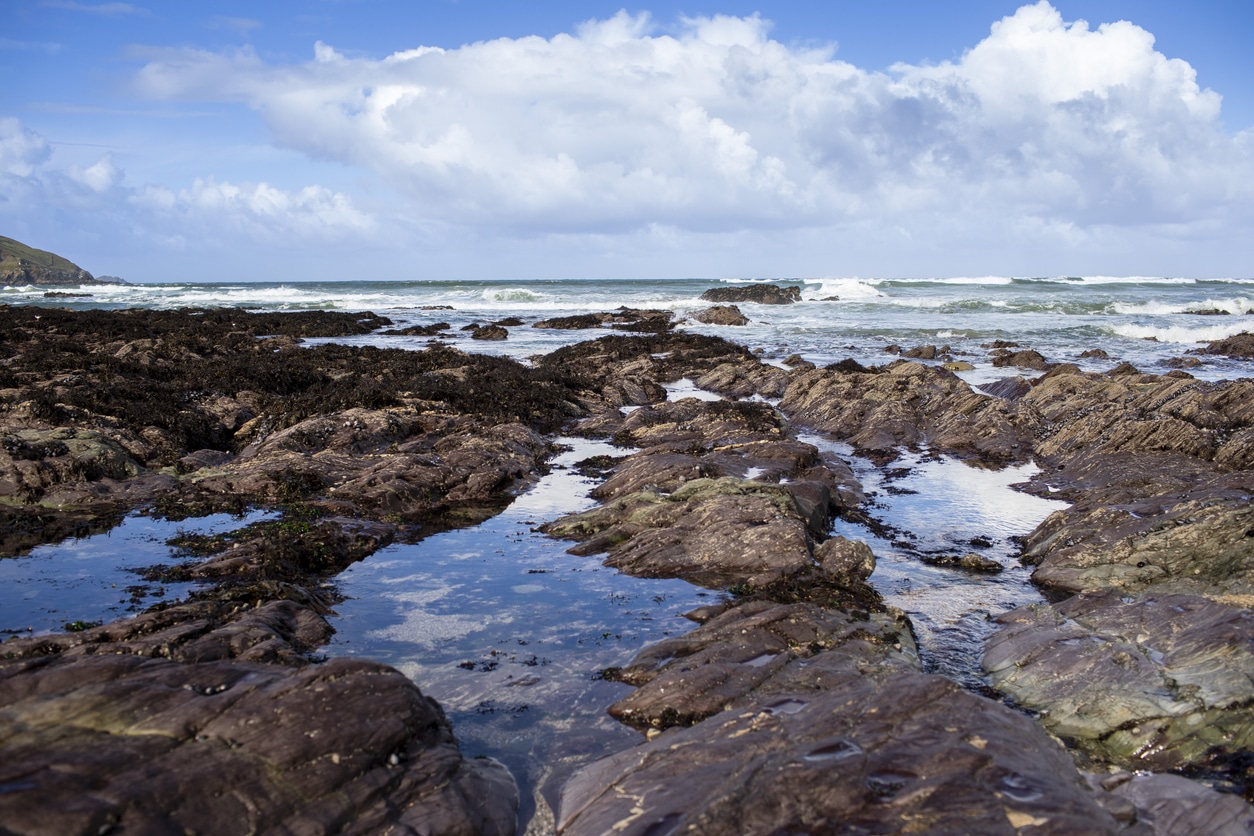
What is a Coastal Habitat and How to Find One
A coastal habitat is a place where the land meets the sea or ocean. There are a number of different types of coastal habitats, as the coastline can vary hugely from rocky cliff edges, sandy beaches, rock pools and more. Importantly, a coastal habitat provides all the necessities including shelter, food, water and air but they can still be quite harsh conditions to live in. Many species of animals and plants have adapted to survive here.
In this blog, we’ll discover more about coastal habitats and what creatures you can find in each type.
What is a rock pool?
When the tide goes back out, it leaves behind small pockets of seawater in rock crevices. Incredibly, these tiny habitats are packed with life. They are isolated during the hightide, which makes them challenging to discover, but they are fascinating and you can easily find them during low tide by exploring the UK coastline.
Exploring these habitats can be a fun activity but must be done in a way that doesn’t harm the animals that make their homes there. Due to the tidal influence and uneven ground, these habitats pose some dangers to us too so always be careful when rock pooling for the animals and yourselves.
What animals live in rock pools?
There’s a whole host of different species that can be found in rock pools around the country. These creatures have adapted to withstand changing salinity and sudden changes in temperature too, as well as finding ways to anchor themselves against waves.
Starfish are often found hiding under rocks and seaweed, such as the common starfish (Asterias rubens). They are able to use their tube feet to cling to rocks as well as being able to regenerate limbs.
You’ll likely also find anemone in rock pools too. Species like beadlet anemone (Actinia equina) will often be found attached to a rock which are left behind when the tide goes out. Interestingly, the beadlet anemone uses its tentacles to sting and catch passing prey, but they will retract them at low tide, making them appear more like a blob of jelly!
It’s really important not to remove these creatures from their rock, as it can cause severe injury to both you and them.

What are sand dunes?
Sand dunes are essentially hills or ridges, formed by sand blowing inland from the beach. They are ever-changing, getting taller the further you get from the beach. You’ll find them around the coastline of the UK, with large areas in the Hebrides.
Young sand dunes develop by the sand getting trapped by obstacles that are moved by the wind and waves. Plants begin to find their home here including sand couch and lyme grass. Marram grass dominates the landscape too which can reduce the amount of exposed sand, which makes way for other moss and grass growing, with soil beginning to form. This eventually creates dune grasslands.
Sand dunes are key as they act as a natural coastal defence and provide a buffer against erosion and flooding.
What animals live in sand dunes?
You’ll find a great number of different species living amongst the sand dunes. Ground-nesting birds will use the marram grass and other vegetation to hide their nests. Other species such as the sand lizard, natterjack toad and dune tiger beetles also live amongst the sand dunes.
What are sandbanks?
Sandbanks are raised deposits of sand or mud in a body of water like the sea. They are typically always submerged or at the very least only partially exposed during low tides. They are shaped naturally by the flowing water, and while they can be hazardous for boats, they are hugely important ecologically.
Sandbanks can help to protect shorelines from intense waves, as well as providing a habitat for certain species. They typically form in shallower waters near the shore and across the mouths of bays or estuaries.

What animals live around sandbanks?
Sandbanks are busy homes for creatures that use the sand to burrow, as well as animals that use the surface of the banks as a home too. This includes mostly worms, crustaceans, molluscs and echinoderms that bury themselves amongst the sediment.
Some fish also utilise sandbank habitats too. Flatfish for example will use the loose sediment to burrow into for camouflage and shelter. They also feed on the worms, molluscs and crustaceans found in the sandbanks.
What are mudflats?
Mudflats are typically formed as saltwater floods cover marshes before retreating again, leaving flat expanses of mud. They are covered at high tide but revealed during low tides, usually forming in sheltered estuaries or natural harbours, like the Severn Estuary.
Towards land, the mudflats become saltmarshes as the mud becomes drier and vegetation grows. Saltmarshes are important because they store carbon, drawing CO2 out of the atmosphere as the plants grow, before they are buried by more layers of sediment. This prevents the plants from releasing the greenhouse gases.

What animals live in mudflats?
Both mudflats and saltmarshes are home to a wide variety of species, mostly smaller animals like worms, snails and terrestrial invertebrates. The shallower mudflats are also a great place for younger fish to stay safe as they grow, acting as nurseries for species like herring, mullet and flounder.
Mudflats and saltmarshes are incredibly important for birds too. Many bird species use the areas as feeding grounds, including the curlew, sandpipers and knot.
What are wetlands?
Wetlands are areas of land that are either permanently or seasonally immersed in water, and they come in all different shapes and sizes. Some examples of wetland habitats include estuaries like the Severn, peat bogs, mangroves and wet grasslands.
Wetlands are under great threat across the UK, with the Wildlife Trust estimating that we’ve lost over 90% of our wetland habitats. However, wetlands are incredibly important as they can accumulate and store carbon, as the plants decay and remain submerged. Peatlands are also an important habitat for plants, as they provide a method of flood defence and purifying the water.
What animals live in wetlands?
Wetlands are an incredibly diverse habitat, with both native and migratory species visiting here. Invertebrates like beetles, snails and larvae are often found amongst wetlands, as well as a number of amphibian species such as newts, frogs and toads.
You’ll find a vast array of birds and mammals across wetlands too. Birds like grebes, cormorants, herons and harriers are often seen in these areas, while mammals like beavers, otters and voles may also be spotted.
Explore coastal habitats at Bristol Aquarium
Here at Bristol Aquarium we have a number of exhibits dedicated to showcasing marine life, with so many incredible species for you to discover. From starfish and anemone to stingrays and sharks, there’s plenty to learn about as we bring costal habitats to life. Don’t forget to book your tickets for your next visit!


