
Rays are some of the most unusual but fascinating animals in the sea, and like many aquatic creatures, there’s more to rays than meets the eye. With over 600 different species around the world, rays are the largest group of cartilaginous fish.
Here we’ll learn some intriguing facts about these animals.
What is a ray fish?
Rays are a species of cartilaginous fish, which means they have no bones. Typically they are known as rays or stingrays, and are flat-bodied distinguished by wing-like fins. Stingrays also have a tail spine. It’s important to note that rays are different to skates, even though they are sometimes mistaken for each other.
14 facts about rays you might not know
Here are a number of fascinating facts about rays so you can show off your new knowledge about these incredible creatures!
Rays are closely related to sharks
They may not look very alike, but rays are related to sharks! This is because sharks are also cartilaginous fish. The two types of animals share a common ancestry and both have skeletons made of cartilage and not bone. Rays actually evolved from flattened sharks!
There are over 600 species of rays
There are over 600 known species of rays (Batomorphi), which makes them the most diverse family of cartilaginous fish. The 26 families under this classification include stingrays, manta rays, skates, electric rays and sawfish.
Rays have been around for over 150 million years
Rays are estimated to have been around for 150-200 million years, since the Jurassic era. They evolved from a bottom-dwelling, shark-like ancestor, which we know from fossil records. Luckily, rays’ teeth and scales fossilised for us to learn this, as cartilage doesn’t fossilise! This means complete body fossils of rays are rare.
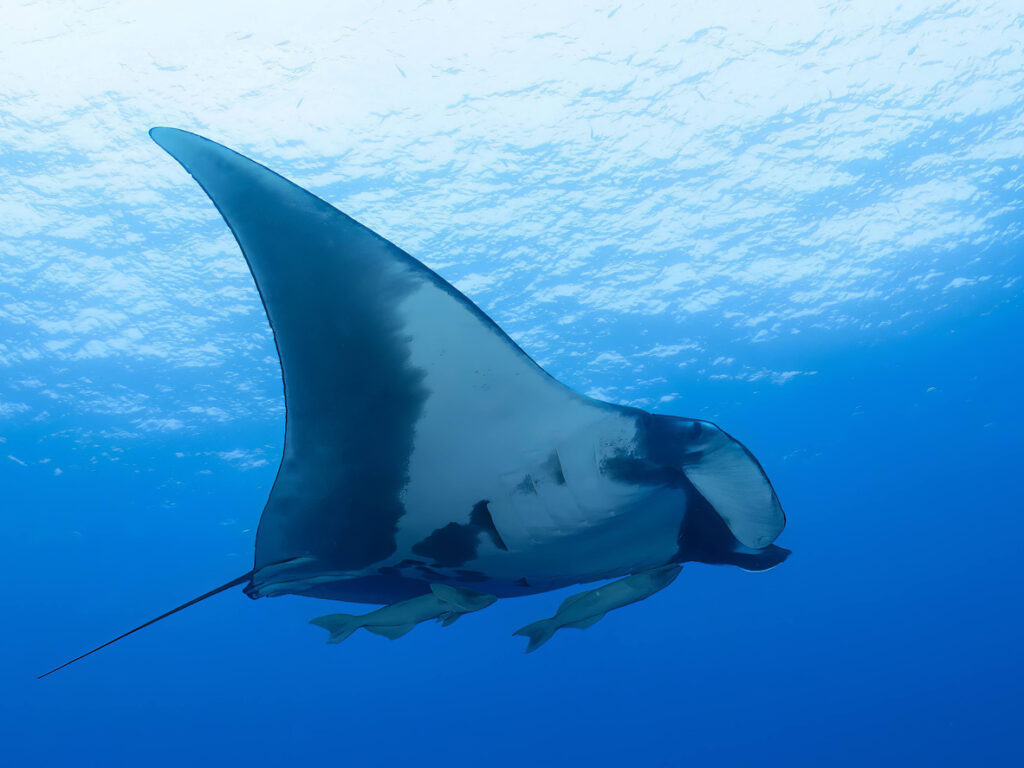
The giant manta ray is the largest species of ray
Giant manta rays are the world’s biggest ray, known to have a wingspan of up to 26ft (8 metres). Disc widths can reach up to around 19ft (6 metres), and they can weigh over 2,000kg (2 tonnes). They have a widespread distribution, found in tropical and temperature waters around the world.
The short-nose electric ray is the smallest species
On the other end of the scale, the short-nose electric ray. They typically measure around 10cm across and weigh around 0.5kg. You can usually find this species in warmer, coastal waters around the Caribbean and Gulf of Mexico.
The UK is home to a number of ray species
You may be surprised to learn that the UK’s waters are home to rays, as well as wider waters around the world. In fact, you’ll find around 18 species of rays in the UK. This includes Thornback rays, Blonde rays and the Common stingray.
Rays come in a variety of colours and patterns
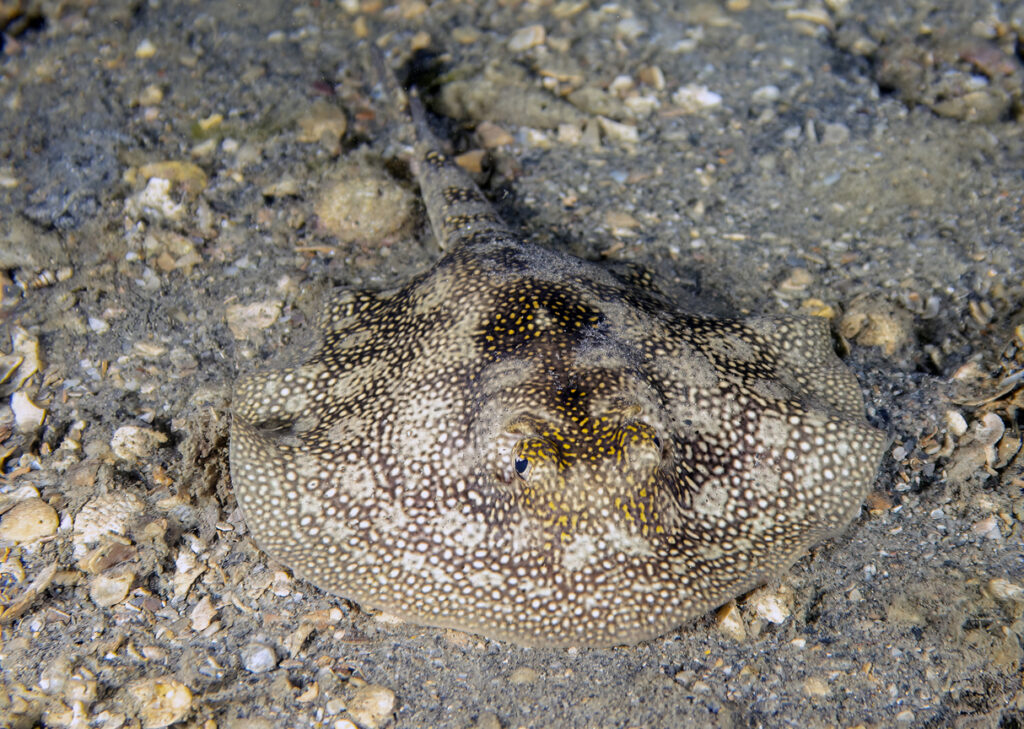
When you picture a ray, you will likely picture a stingray which is a bluish-grey with a white underside. However, rays come in a huge variety of different appearances depending on their species. Thornback rays, for example, vary between light brown and grey, with small brown spots and patches of yellow. This variation of colours and patterns between species is due to the habitat rays are native to.
Rays are experts at camouflage
Rays utilise the power of camouflage through methods like countershading. This is helped by their upper and lower bodies being different shades of lightness, to blend in with the shadows and light. They also have disruptive patterns and will bury themselves in sand to hide when necessary. Some species, like the yellow stingray, can even adjust their colouring to better match their background.
Ray habitats are diverse
Rays inhabit an incredibly diverse environment around the world. They are found in both shallow, coastal waters and open ocean. In most cases, rays prefer tropical and temperate water. They can also be found in both saltwater and freshwater habitats.
A ray’s mouth is underneath its body
Located underneath its body, the ray’s mouth is in the perfect place to dine on its prey along the bottom of the ocean. Their jaws are incredibly strong despite the lack of bones. What’s more, their gills are also under their body.
They use sensors to find food
Just like their shark relatives, rays rely on electro-sensors to find their prey. These sensors are known as Ampullae of Lorenzini, appearing as tiny pores around the snout. They can detect electric fields in the water, which is a much more effective method at finding prey seen as the rays’ eyes are on top of their bodies.
Most rays give birth to live pups
Some species of rays are ovoviviparous, which means eggs hatch inside the mother and they give birth to live young. Ray pups are miniature but fully-formed versions of adult rays from birth. They are independent from birth too.
Rays typically enjoy being alone
Many types of rays are typically solitary, with rays in the open ocean tending to be more solitary due to their migratory nature. However, some are surprisingly social. In particular, reef manta rays form long-lasting associations and may even gather in larger numbers for purposes like breeding.
Many ray species are threatened
A lot of species of rays are facing endangerment, thanks to issues such as overfishing and bycatch. However, in some parts of the world there is also a trade for their body parts, such as gill plates. In particular, all 9 species of manta and devil rays are threatened with extinction.
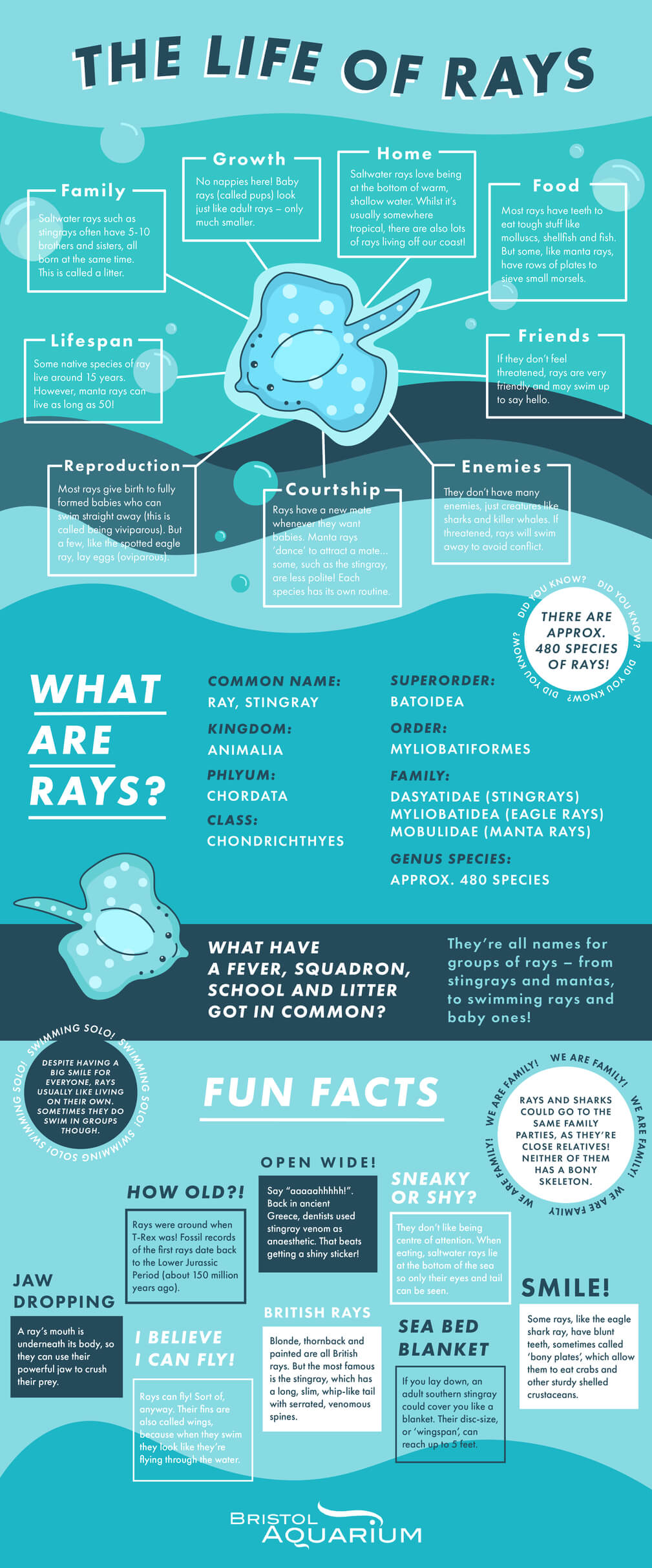
Looking to learn more about the life of a ray? Check out our downloadable graphic here!
Rays at Bristol Aquarium
Here at Bristol Aquarium we have a number of rays for you to come and discover. This includes the common stingray, ocellate river stingray, tiger ray (also known as Vermiculate river stingray), cownose ray and flapnose ray. You can see these in our exhibits Bay of Rays, Edge of the Rainforest and Amazing Amazon.