
Animals in aquariums need expert care to ensure that their surroundings are kept in an ideal condition for them to live in. It’s easy when admiring the beautiful animals to forget about the hard work and dedication that goes into keeping these environments as close to their real-world homes as possible.
At Bristol Aquarium, our team of aquarists perform one of the most important jobs in the aquarium, so we’d love to shed some light on the role they perform, the skills and qualifications required, and the pathways that you can take to become an aquarist.
What Does an Aquarist Mean?
The term “aquarist” refers to anyone who cares for aquatic animals and manages their environments. However, there’s a big distinction between a hobby aquarist and a professional aquarist.
While a hobby aquarist might look after relatively small tanks, with small animals and no formal training, a professional aquarist will have years of study and training to care for aquariums that utilise multi-million gallons of water.
Types of Aquarists
Professional aquarists are all highly trained individuals, but they might choose to specialise across a range of disciplines. Here is just a brief overview of some of the different types of aquarists:
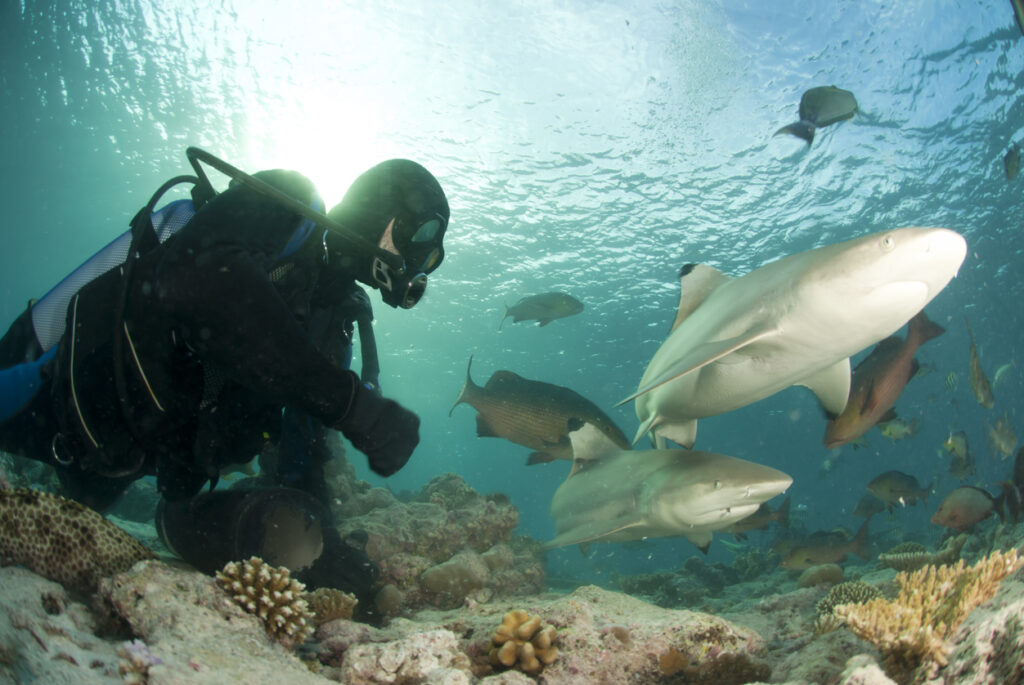
- Marine aquarist: A marine aquarist specialises in the care of saltwater species like sharks, rays and corals.
- Freshwater aquarist: A freshwater aquarist looks after fish and plants from rivers, lakes and streams.
- Tropical aquarist: A tropical aquarist specialises in the care of tropical fish that thrive in warmer water.
- Coldwater aquarist: A cold-water aquarist works with species that thrive in cooler temperatures.
- Research aquarist: A research aquarist supports scientific studies, conservation projects and breeding programmes.
- Public aquarium aquarist: A public aquarium aquarist maintains exhibits and helps educate visitors about aquatic life.
What Does an Aquarist Do?
An aquarist’s role is never the same from one day to the next; in fact, we spoke to one of our aquarists to ask them about their role.
Our Aquarium Aquarist, Rebekah, said:
“It’s fascinating seeing the science behind keeping aquatic animals healthy. I also love creating enrichment for the fish and finding new ways to improve their quality of life, as well as feeding the larger species like our rays, grouper and sharks. No two days are ever the same, and I’m constantly learning something new. It’s such a rewarding career for anyone passionate about animals, science and making a real difference to animal welfare.”
Animal Care
The main responsibility of an aquarist is the health and happiness of the residents, which begins with complex feeding routines that are far more involved than simply sprinkling flakes. Every species has specific dietary requirements, and aquarists spend significant time in the prep kitchen weighing out restaurant-quality seafood, vitamins, and specialised gels. For example, the large rays in the Bay of Rays are fed by target-feeding using tongs and grabbers to ensure they get their fair share, while the tropical piranhas require a diet that mimics their opportunistic feeding habits in the Amazon.
Beyond nutrition, aquarists must be expert observers who look for subtle changes in a fish’s scales, swimming patterns, or respiratory rates. Behavioural observation is key because recognising that a seahorse isn’t hitching properly in the Learning Lab or that a predator in the Coral Seas display is behaving unusually can be the first sign of a health issue that needs immediate veterinary attention.
Tank & Habitat Maintenance
An aquarium is a closed loop, meaning the aquarist must act as the Earth’s natural filtration for the animals. These professionals are part-time chemists who conduct regular water quality tests for parameters such as temperature, salinity and pH levels.
In the Urban Jungle exhibit, maintaining the exact humidity and temperature for both the fish and the terrestrial plants is a constant balancing act. Behind every tank is a complex network of pumps, UV sterilisers, and protein skimmers known as Life-Support Systems. Aquarists must understand these systems deeply to ensure the water remains crystal clear and oxygen-rich.
Enrichment & Welfare
Modern husbandry goes beyond basic survival and focuses on thriving through environmental enrichment. To prevent boredom and encourage natural instincts, aquarists introduce toys or puzzles into the habitats. For the rays, this might involve burying food in the sand to encourage their natural foraging behaviours, while other species might be encouraged to hunt for their meals through scattered feeding. Every task is underpinned by strict welfare standards and conservation ethics.
Public Engagement & Education
An aquarist’s job doesn’t end behind the scenes because they are the face of the aquarium and a bridge between the public and the deep blue. Our aquarists must be able to translate complex science into engaging stories. They answer everything from technical biological questions to common inquiries about local marine life. While they are animal carers first, they are also educators who inspire the next generation of conservationists by sharing their passion and the unique personalities of the animals they work with daily.

Skills and Traits You Need to Become an Aquarist
As an aquarist, you’ll be spending a lot of time caring for animals, so it goes without saying that an interest and appreciation of aquatic life is a must for an aquarist. Secondly, scientific knowledge is crucial for an aquarist, typically gained through a degree in marine biology, zoology, or animal science.
Something you might not have considered is the physical side of the job. Equipment can be heavy, and working in water can be tiresome, so a level of physical fitness is crucial for the role of an aquarist.
The role of an aquarist works in unison with a whole range of team members in the aquarium. So, working as a team player is an invaluable skill to possess, alongside attention to detail and the patience to perform the job properly.
Qualifications and Career Pathways
Becoming an aquarist requires a blend of academic knowledge and hands-on practical experience. There is no single set path, but most professionals in the field follow one of several recognised routes to gain the necessary expertise. Many begin with college courses in animal management, which provide a solid foundation in general husbandry and animal biology. Others pursue university degrees in specialised fields such as Marine Biology, Zoology, or Animal Science. These degrees are particularly valuable for understanding the complex physiological and ecological needs of diverse aquatic species.
Apprenticeships are also becoming a popular way to enter the industry, allowing aspiring aquarists to learn on the job while gaining formal qualifications. However, it is important to note that in this competitive industry, practical experience is often considered just as vital as a degree. Employers look for individuals who have spent time cleaning tanks, preparing diets, and monitoring water chemistry. Gaining this experience through volunteering and work placements is essential. We highly recommend seeking opportunities at local aquariums, wildlife centres, or even fish rehoming charities to build a portfolio of hands-on skills that a textbook simply cannot provide.
Why Aquarists Play a Vital Role in Conservation
Aquarists are much more than caretakers; they are frontline conservationists dedicated to the survival of aquatic species. One of the most significant ways they contribute is by supporting and managing intensive breeding programmes. By carefully mirroring natural environments and seasonal cues, aquarists can encourage the reproduction of threatened species, providing a “safety net” for wild populations.
Conservation research is another cornerstone of the role. The data collected by aquarists regarding growth rates, social behaviours, and nutritional needs provides invaluable insights that help scientists protect animals in the wild. Ultimately, this career matters because it bridges the gap between the public and the hidden world of the ocean, fostering a deeper understanding of why ocean protection is a global necessity.
Conservation education is also an important area, particularly through the likes of talks, tours, TV and radio outlets to help spread the word and offer valuable insights.
Is a Career as an Aquarist Right for You?
If you possess a deep-seated love for both science and animals, a career as an aquarist could be incredibly rewarding. It is a vocation that suits those who are naturally curious and enjoy solving complex biological puzzles. However, it is also a role that demands resilience and physical dedication; it involves early starts, heavy lifting, and a constant commitment to the welfare of the animals in your care, regardless of the time of day.
Our Aquarium Aquarist, Rebekah, says, “the role inspires young people by showing that a career with animals is built on passion, science, and dedication. It highlights that working in an aquarium isn’t just about loving animals; it’s about understanding ecosystems, solving problems, and constantly learning. Seeing aquarists care for and advocate for aquatic life can encourage young people to realise that their interest in animals can grow into a meaningful and impactful career.”
If this sounds like the path for you, we invite you to visit Bristol Aquarium to see our team in action, ask questions during our daily talks, and discover the wonder of the underwater world for yourself.