Written by Scarlett Murray
With the new year well on its way, many of us will be making new year’s resolutions – to read more books, do more exercise – new year, new me. However, not many could imagine entering the new year as an entirely new person with a different body and gender.
What is a sequential hermaphrodite?
In the fish world though, this is an entirely normal phenomenon that occurs in many species, from the giant Asian sheepshead wrasse to the tiniest ribbon eels. These species are known as sequential hermaphrodites, which means they can change their gender/sex permanently at a specific point in their lives. Some are ‘protandrous’ (start male and become female) or ‘protogynous’ (start female and become male). This can occur at any point during their lives, not just in the new year!
Why do they change their gender?
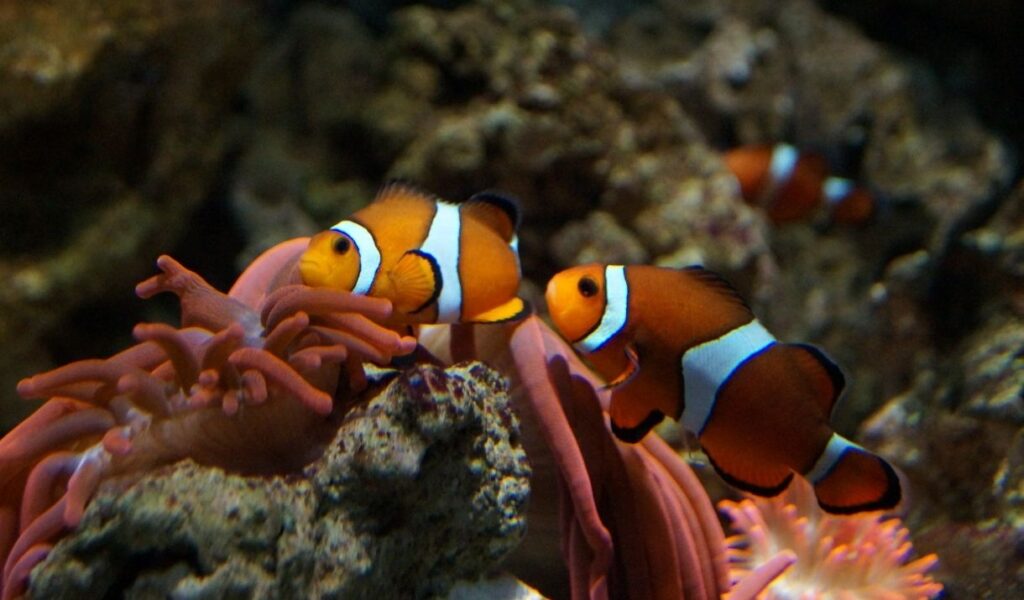
One of the most famous examples of protandry is in the adorable common clownfish (Amphiprion ocellaris), which we have in the coral seas zone of the aquarium! Common clownfish live in female-led groups which occupy one sea anemone, and dominance is based on the size of the fish. The most dominant is the breeding female, but if the female is removed from the group, then the second-most dominant, the breeding male, will change his gender to female and take her place as the most dominant fish. This gender-switching ensures that there is always a female available to reproduce and remain leader of the clownfish shoal. It is just one of many strategies used by fish to ensure maximum reproductive success.
Now let’s dive into some other curious clownfish facts.
Where do common clownfish live?
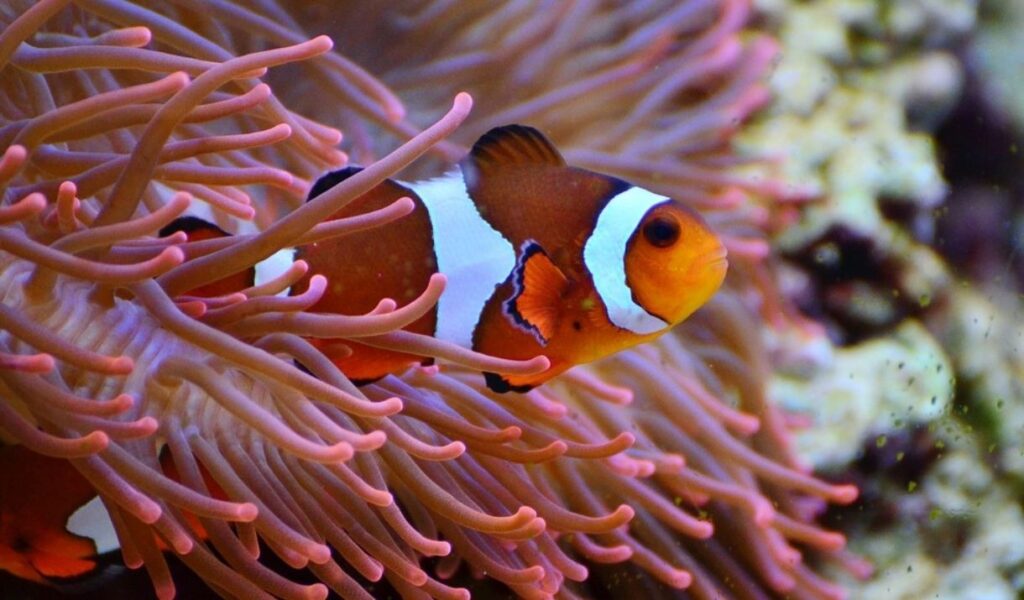
Common clownfish, also known as ocellaris clownfish, have a wide distribution. Their habitat is the warm waters of the indo-pacific ocean. You will find them in coral reefs from northern Australia, south east and east Asia, and the southern islands of Japan. They have a symbiotic relationship with sea anemones which the fish live in, for both shelter and to protect themselves from external threats.
Why do common clownfish have stripes?
It’s well known that clownfish have stripes to blend in with their sea anemone homes, but did you know that clownfish use their unique stripe patterns to recognise each other? As well as that, the stripes can disorient predators.
What types of sea anemones do common clownfish live in?
Common clownfish can inhabit many different species of sea anemone (which are actually a type of animal!). These include the Ritteri anemone, the giant carpet anemone and Mertin’s carpet anemone. Here at Bristol Aquarium they live alongside bubbletip anemones! The relationship between clownfish and anemones is ‘symbiotic’. Anemones have long stinging tentacles used for catching prey, which also acts as a predator-resistant home for the clownfish. In return, the clownfish cleans the anemone and lure prey to it. Talk about teamwork!
How do common clownfish avoid getting stung by anemones?
Clownfish develop a thick mucus coating which has special chemical properties that tell the sea anemone ‘please don’t sting me!’ They acquire this coating by rubbing themselves against the sea anemone.
Do common clownfish live in groups?
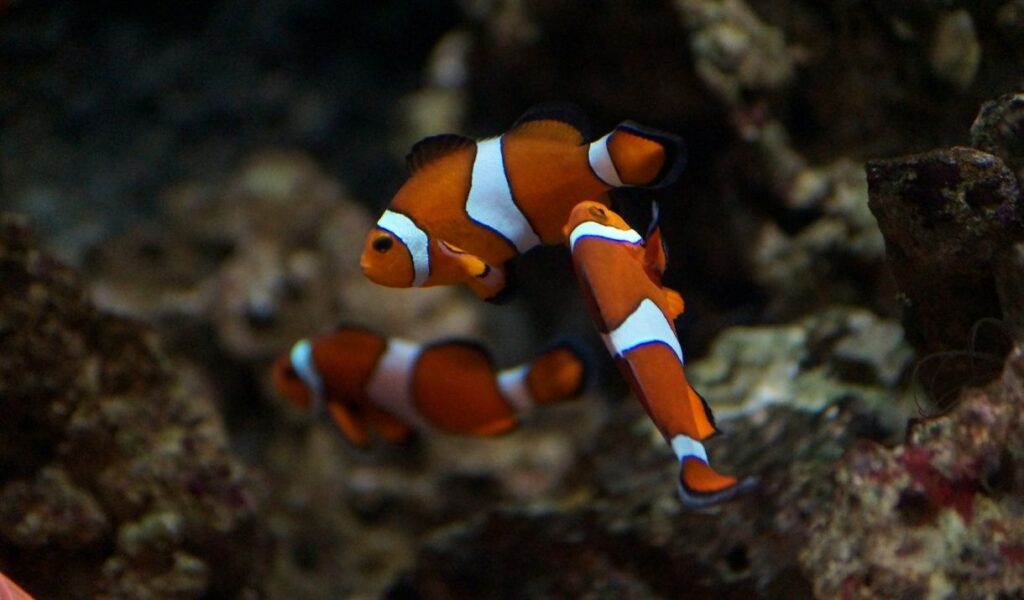
Common clownfish live in groups of around 2-6 clownfish, with the dominant female being the leader of the pack.
Do common clownfish mate for life?
Well, kind of. Common clownfish do form strong monogamous bonds and will only breed with one other individual at a time. However, should a male clownfish become the dominant female, they will mate with another individual after the original dominant female has passed away.
Why are some of the clownfish at the aquarium black and white?
Although they’re pretty different from the typical orange-and-white common clownfish, they are in fact still the same species. The black common clownfish is commonly bred in captivity for its unique look.
Can I see them in the UK?
While you won’t see them in the waters around the UK, you can come and see them at Bristol Aquarium in our coral seas exhibit! Here you can learn all about the many fish that live in coral reefs around the world, as well as the reasons why protecting our coral reefs is so important. Whether your new year’s resolutions involve saving more money or eating healthier, why not make a resolution to come and visit our clownfish troupe at Bristol Aquarium?