
Covering over 70% of the Earth’s surface, the oceans are some of the most mysterious places on the planet. Holding secrets that we can only imagine, the oceans have barely been explored, but not through lack of trying. The oceans are simply so big and so difficult to explore that it would take too much time and money to accurately explore them.
In this blog, we’re going to explore how much of the ocean has been explored and how efforts are being made to explore even more of the ocean.
What Percentage of the Ocean Has Been Explored?
As of June 2025, around 5% of the ocean has been explored, but approximately 27.3% of the global seafloor has been mapped. This discrepancy comes from the fact that mapping the seafloor is a process that can be achieved with machinery to map vast sections of the ocean. Exploring the ocean, on the other hand, is a more hands-on experience that is expensive, time-consuming, and dangerous.
Why Has So Little of the Ocean Been Explored?
There are a few challenges that marine scientists face when trying to explore the oceans. At the deepest point in the ocean, the pressure exerted on seacraft or people is about 1,000 times greater than standard atmospheric pressure. To put this in perspective, it’s the equivalent of having an elephant standing on your head.
Add to this the darkness at those kinds of depths, which means that even to see a matter of metres in front of you, you’d need a heck of a lot of light. The factor of light and pressure make the equipment needed to explore the depths of the ocean incredibly expensive and difficult to manufacture.
And even if you managed to get your hands on the equipment and the know-how to operate it, you’d still have the enormity of the ocean to contend with.
How Do Scientists Explore the Deep Ocean?
Since we humans aren’t built to handle the immense pressure of the deep, we’ve had to get pretty creative! Scientists use a fleet of high-tech gadgets to act as our eyes and ears in the abyss.
Remotely Operated Vehicles (ROVs)
ROVs are robotic submarines tethered to a ship at the surface by a long umbilical cord. This cable allows pilots to steer them from the comfort of a dry cabin. Equipped with high-definition cameras, powerful lights, and nifty robotic arms, they can pluck a delicate sea sponge or a mysterious rock sample from the seafloor while operators watch the live feed in 4K.
Submersibles
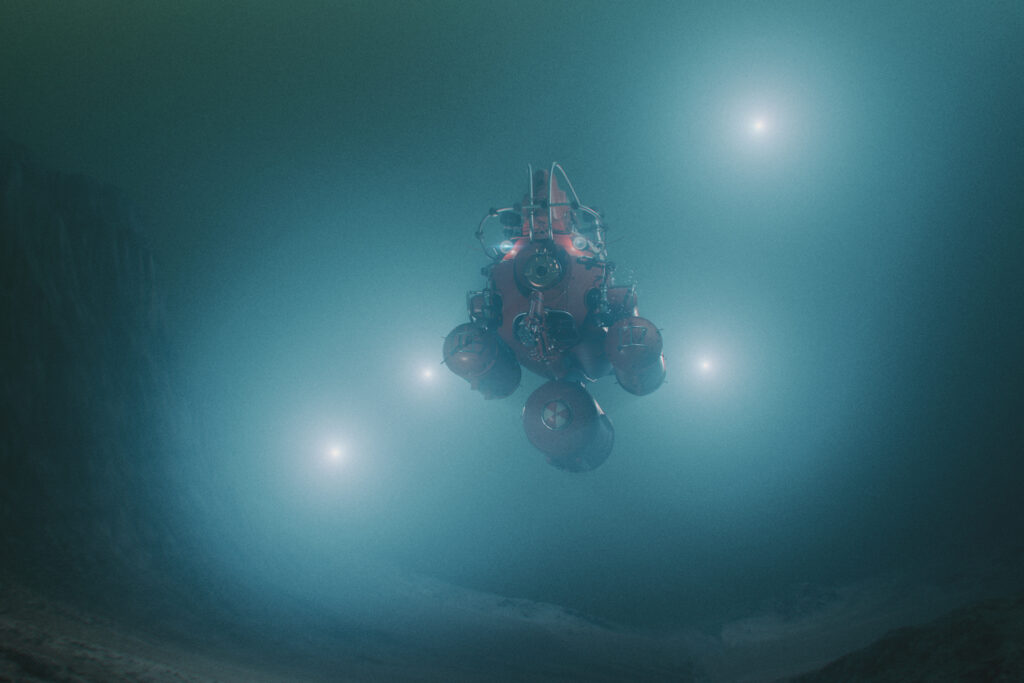
While ROVs are great, sometimes nothing beats a first-hand look. Submersibles are small, pressurised submarines that actually carry scientists into the deep. Because they are incredibly expensive to build and require rigorous safety checks, they aren’t used as often as robots. However, for a marine biologist, there is nothing quite like peering through a thick acrylic porthole to see a prehistoric-looking shark swim by.
Autonomous Underwater Vehicles (AUVs)
If an ROV is a tethered drone, an AUV is a self-driving car. These clever robots are programmed with a mission and then released to go “off-roading” on their own. They glide through the water, mapping the seafloor and silently gathering data on things like water temperature and salinity (saltiness) before returning to the ship to upload their homework.
Sonar Mapping Technology
We can’t always see the bottom, but we can definitely hear it! Sonar (Sound Navigation and Ranging) works by sending pings down to the ocean floor. By timing how long it takes for the echo to bounce back, scientists can create 3D maps of massive underwater mountains and deep trenches without ever having to touch the water.
Research Ships
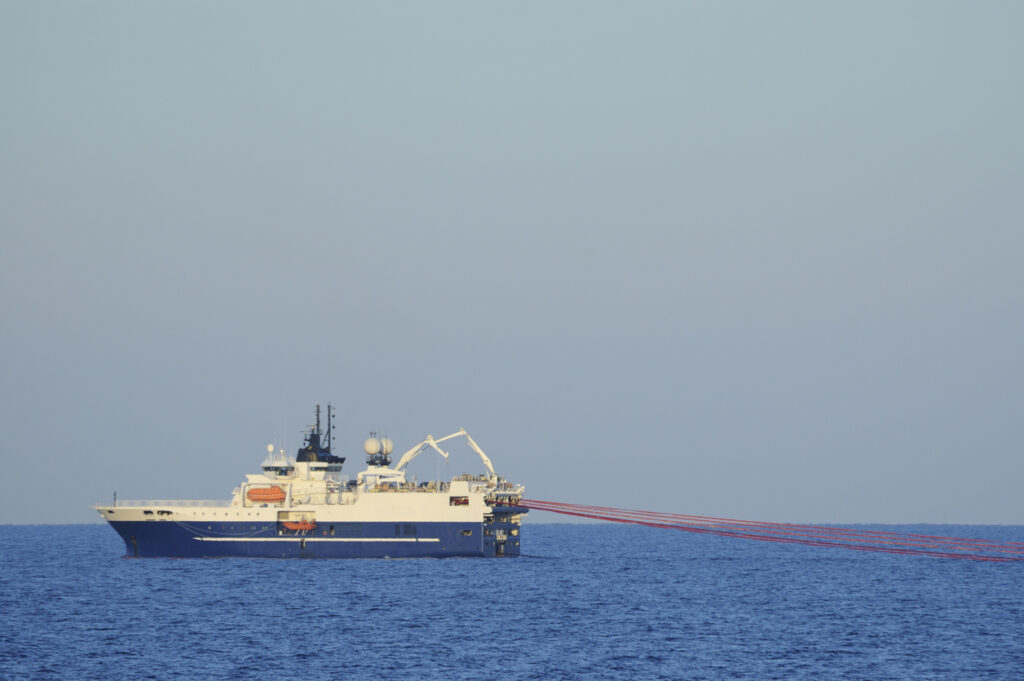
None of the tech above would be possible without the mothership. These research ships are essentially floating laboratories. They are packed with scientists, engineers, and heavy-duty cranes used to launch underwater vehicles. They spend weeks at sea, acting as a hub for every discovery made beneath the waves.
Incredible Discoveries from the Deep
Every time we send a camera down, we find something that looks like it belongs on another planet! Here are just a few of the mind-blowing secrets the ocean has given up so far:
Hydrothermal Vents
Imagine underwater chimneys spewing black smoke that is hot enough to melt lead! These vents create an oasis of life in the freezing deep, proving that some creatures don’t need sunlight to survive; they live off chemicals instead.
Bioluminescent Species
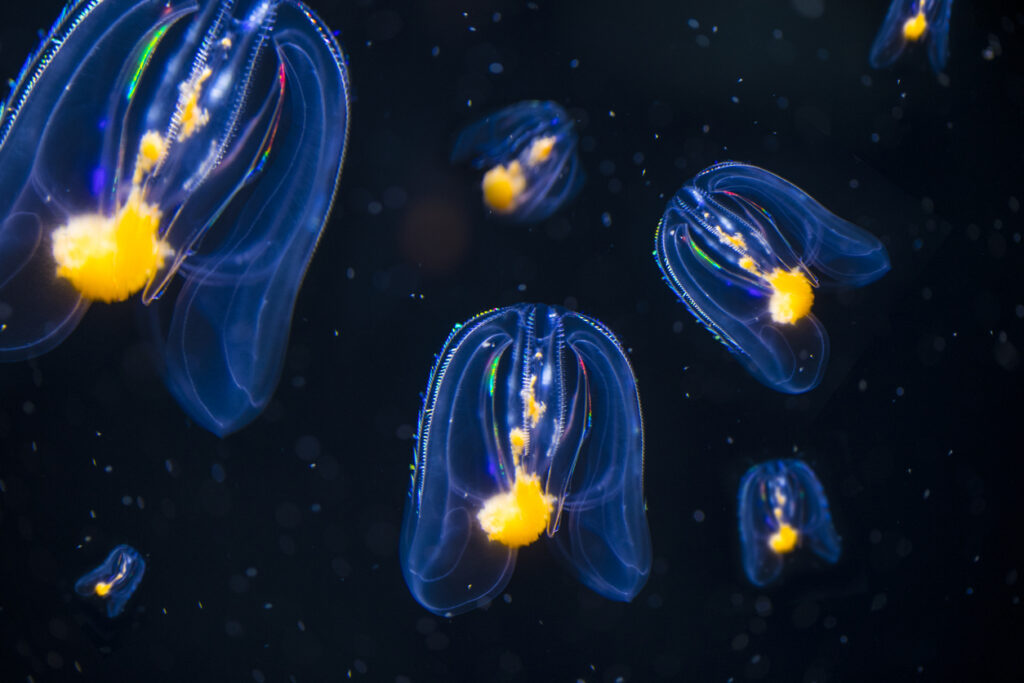
In a world of total darkness, many animals make their own glow-in-the-dark light. From the famous Anglerfish with its glowing lure to comb jellies that shimmer like neon signs, the deep ocean is a beautiful light show.
Deep-Sea Coral Reefs
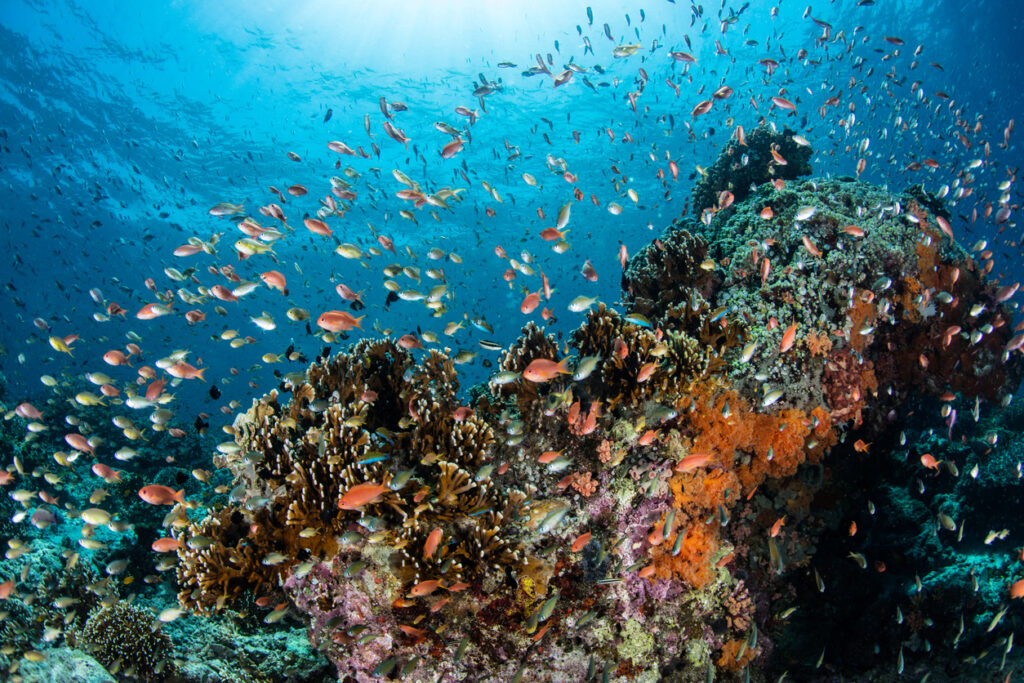
You might think corals only live in warm, sunny shallows, but we’ve found massive, ancient reefs thousands of metres down. They grow incredibly slowly and provide homes for hundreds of other deep-sea species.
New “Giant” Species
We are constantly finding big surprises, from Giant Squids that were once thought to be myths to massive, newly discovered coral colonies that have been growing for centuries. The depths of the ocean appear to be ideal locations for enormous species to thrive.
The Mariana Trench Ecosystems
Exploring the deepest point on Earth revealed that even at the bottom of the world, life finds a way. We’ve discovered translucent snailfish and tiny shrimp-like creatures living in a place we once thought was a desert.
Why Ocean Exploration Matters
It’s not just about finding cool-looking fish; exploring the blue heart of our planet is vital for our own survival!
Understanding Climate Change
The ocean absorbs a huge amount of the world’s heat and CO2. By studying the deep, we can better predict how our climate is changing and how to protect our future.
Protecting Marine Biodiversity
We can’t protect what we don’t know exists! Exploring helps us find hotspots of life that need urgent protection from pollution or overfishing.
Discovering New Species
Many deep-sea organisms contain unique chemicals that could lead to the next big breakthrough in medicine or technology. For example, Sea Squirts (Aplidium albicans) contain an antiviral compound that was used during clinical trials to treat COVID-19.
Supporting Conservation
When we map vulnerable ecosystems, we give policymakers the data they need to create Marine Protected Areas, ensuring these underwater wonders stay safe for generations to come.
Discover More about the Ocean at Bristol Aquarium
You don’t need a multi-million-pound submersible to start your own voyage of discovery! At Bristol Aquarium, we bring the wonders of the deep to the land in an exciting and accessible way.
Our displays are designed to give you a diver’s eye view of the incredible ecosystems we’ve touched upon today.
Ready to start your adventure? Book your tickets today and come see the wonders of the ocean up close and personal!