
While we don’t have any butterflies here at Bristol Aquarium, our lush Urban Jungle exhibit is the perfect place to learn about the lush environments they call home. By exploring the vibrant plants in our Botanical House, you can see exactly what these fascinating insects need to survive and thrive!
In this blog, we’re diving into the incredible world of the butterfly. By understanding the life cycle of a butterfly, we can appreciate how these delicate creatures grow and why certain plants are so vital to their survival.
What Is the Life Cycle of a Butterfly?
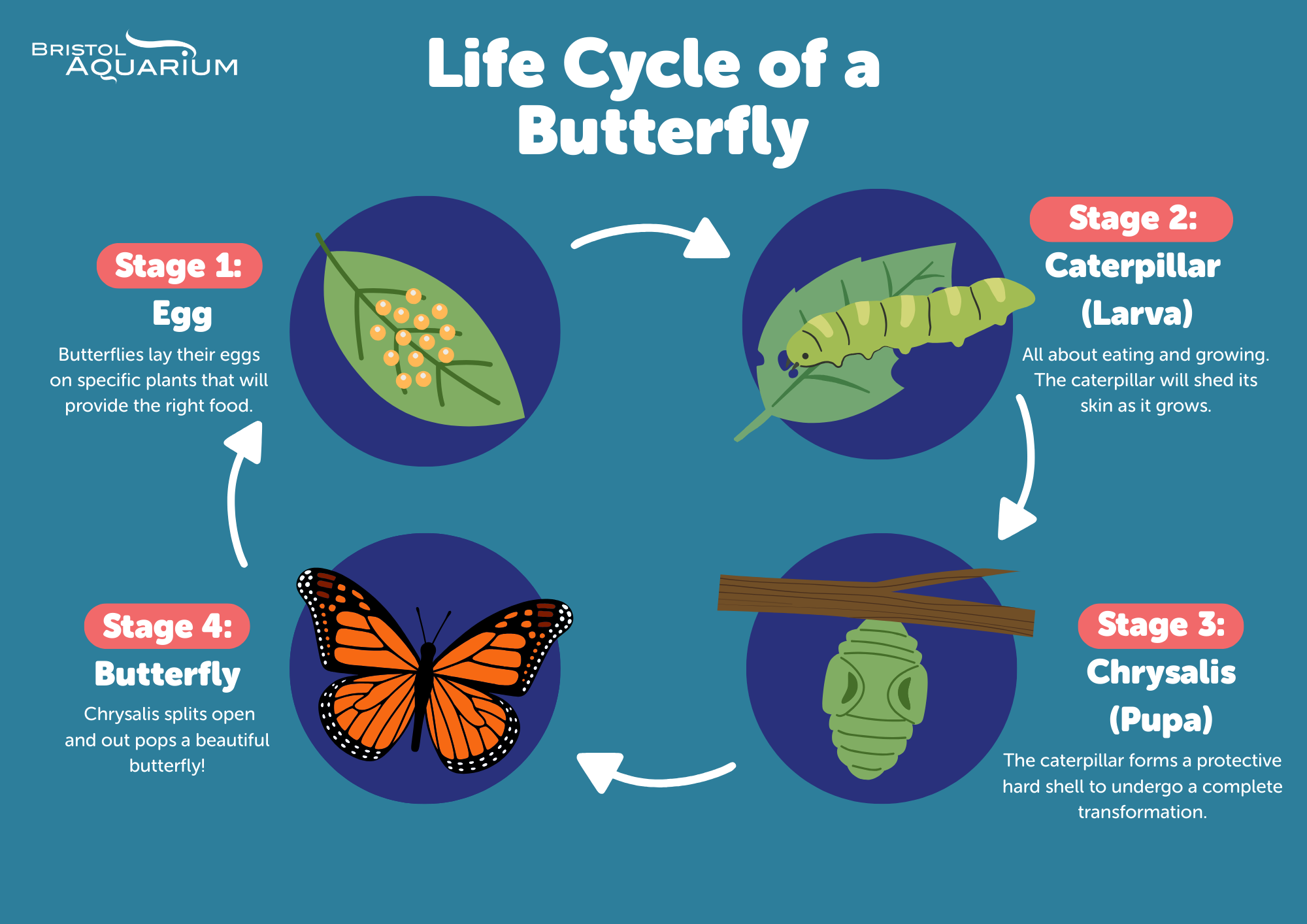
Butterflies are masters of change! They go through four distinct stages of growth in a process called metamorphosis.
Think of metamorphosis as a “superpower” transformation. It is a scientific term for a living thing that changes its physical form entirely. Like a crawling caterpillar turning into a fluttering butterfly!
Stage 1: Egg
Every butterfly starts as a tiny egg. Mother butterflies are very clever; they lay their eggs on specific plants. They do this because when the tiny egg hatches, they need a very specific type of leaf to eat immediately. These eggs usually hatch only when the weather is warm enough to support new life, which usually happens within a few days.
Stage 2: Caterpillar (Larva)
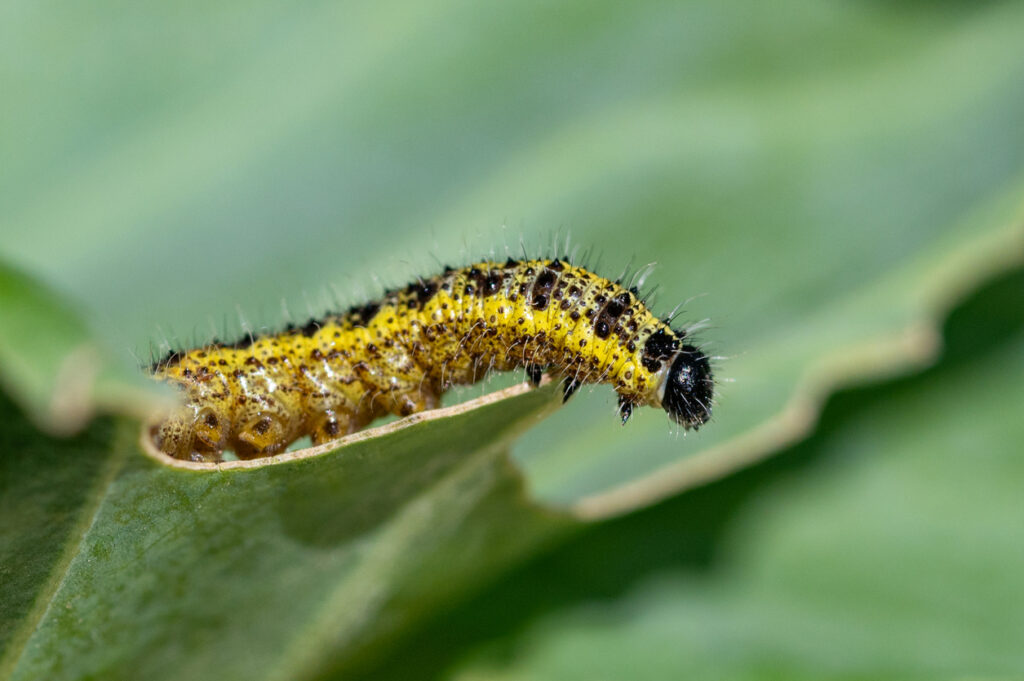
Once the egg hatches, out pops a hungry caterpillar. This stage is all about eating and growing. As the caterpillar munches on leaves, it grows so fast that its skin becomes too tight. To keep growing, it must moult, which means shedding its old skin to reveal a bigger one underneath. This stage can take anywhere from 2-5 weeks.
Stage 3: – Chrysalis (Pupa)
Once the caterpillar is big and strong, it’s time for the big change. It forms a hard shell called a chrysalis (or pupa). Inside this protective casing, the caterpillar’s body completely reorganises itself. Depending on the species, the caterpillar may remain in a chrysalis for a couple of weeks or several months, particularly in winter.
Stage 4 – Adult Butterfly
Finally, the chrysalis splits open, and a butterfly emerges with wet, crinkled wings. After pumping fluid into its wings and letting them dry, it takes flight! Adult butterflies spend their time drinking nectar from flowers. While they drink, they help with pollination, moving pollen from flower to flower so that plants can grow seeds and fruit.
A butterfly’s lifespan can vary greatly by species, with some only living for a matter of weeks while others survive months.
Life Cycle of a Butterfly Poster
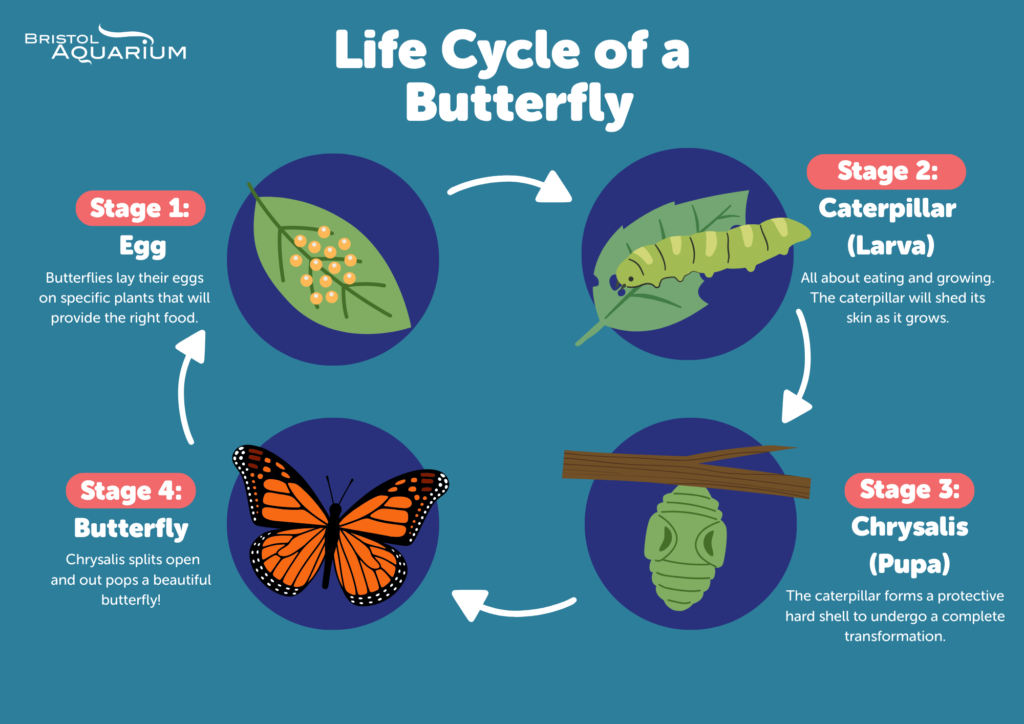
To help you remember these amazing stages, we’ve created a colourful butterfly life cycle poster! It’s perfect for the classroom or your bedroom wall.
The Role of Plants in a Butterfly’s Development
Even though we don’t currently keep butterflies at the Aquarium, our Botanical House is filled with the exact types of plants that butterflies and caterpillars need in the wild. A healthy habitat is the perfect place for the butterfly life cycle.
In our Urban Jungle, we care for several species that are famous for supporting these beautiful insects:
Brugmansia (Angel’s Trumpet)
This is a vital larval host. Our botanists even noticed that our Brugmansia were attacked by hungry caterpillars earlier this year! Some caterpillars store this plant’s toxins in their bodies to make themselves taste bad to predators.
Canna Lilies
These produce nectar-rich flowers that act like a fuel station for butterflies and hummingbirds. Canna lilies are often the only food source for the larvae of the Brazilian skipper butterfly.
Tradescantia pallida (Purple Heart)
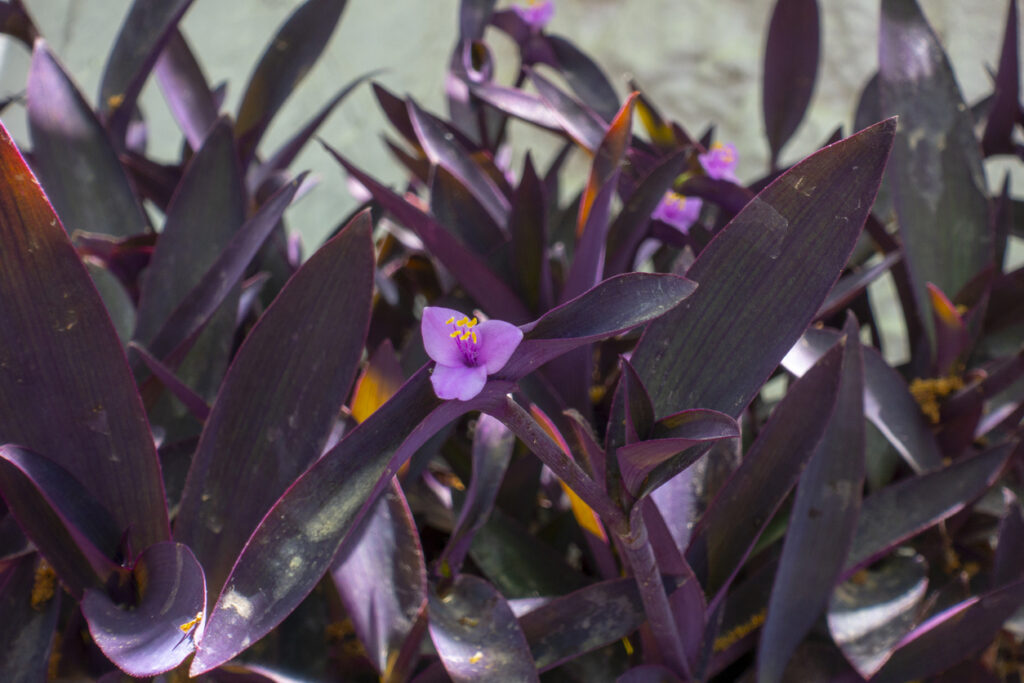
Butterflies are naturally drawn to pink and purple shades. This plant’s vibrant foliage and three-petaled flowers are a great choice for attracting butterflies to a garden. Their flowers provide the nectar for adult butterflies, and the foliage serves as a food source for some caterpillars.
Coffea arabica (Arabica Coffee)
Known for its fragrant white blossoms, this plant provides a high-energy nectar boost for pollinators. It attracts bees and other insects, as well as butterflies, and while it’s actually a self-pollinating plant, the likes of butterflies can actually improve the quality and size of the coffee beans from the plant!
Pseudobombax ellipticum (Shaving Brush Tree)
The shaving brush tree blooms in late winter and spring when there are little leaves, making the nectar even more accessible to butterflies, bees and hummingbirds. This tree has large, fluffy and fragrant flowers that bloom in white, red and pink.
Learn All About Wildlife at Bristol Aquarium
Nature is full of amazing transformations, and butterflies are just the tip of the iceberg. Even our animals in our aquariums go through mesmerising life cycles. While you explore our entire aquarium, you can see firsthand how a tropical ecosystem works together to support life.
Want to learn more? We offer fantastic opportunities for discovery. Our aquarium is perfect for school trips, specifically designed to be understandable for KS1 and KS2 children.
Our daily feeds also offer the chance to see what our animals eat and how we take care of them within the aquarium.
Ready to dive into your next adventure? Book your tickets to Bristol Aquarium online!