
When it comes to recognisable fish, there are few more familiar than the catfish. While the term may have come to mean something else in modern language, here we’ll be focusing solely on the aquatic animal! So, if you’re hoping to learn a bit more about what catfish eat, where they live and other fascinating facts, let’s get stuck in.
What is a catfish?
Catfish are part of a diverse order, known as Siluriformes. They are typically known for their whisker-like barbels that are found all around their snout, just like a cat – which is how they get their name!
How many species of catfish are there?
Catfish are an incredibly diverse group of ray-finned fish, and it’s thought there are over 3,000 different species. Depending on how they are classified, there’s around 40 families. They differ in characteristics, with some having tough, bony plates, with others lacking any armour. What’s more, not all catfish have those famous barbels either!
From the largest Mekong giant catfish (Pangasianodon gigas) to the tiny, parasitic candiru (Vandellia cirrhosa), they are a fascinating collection of fish that display a whole host of different features.
What do catfish look like?
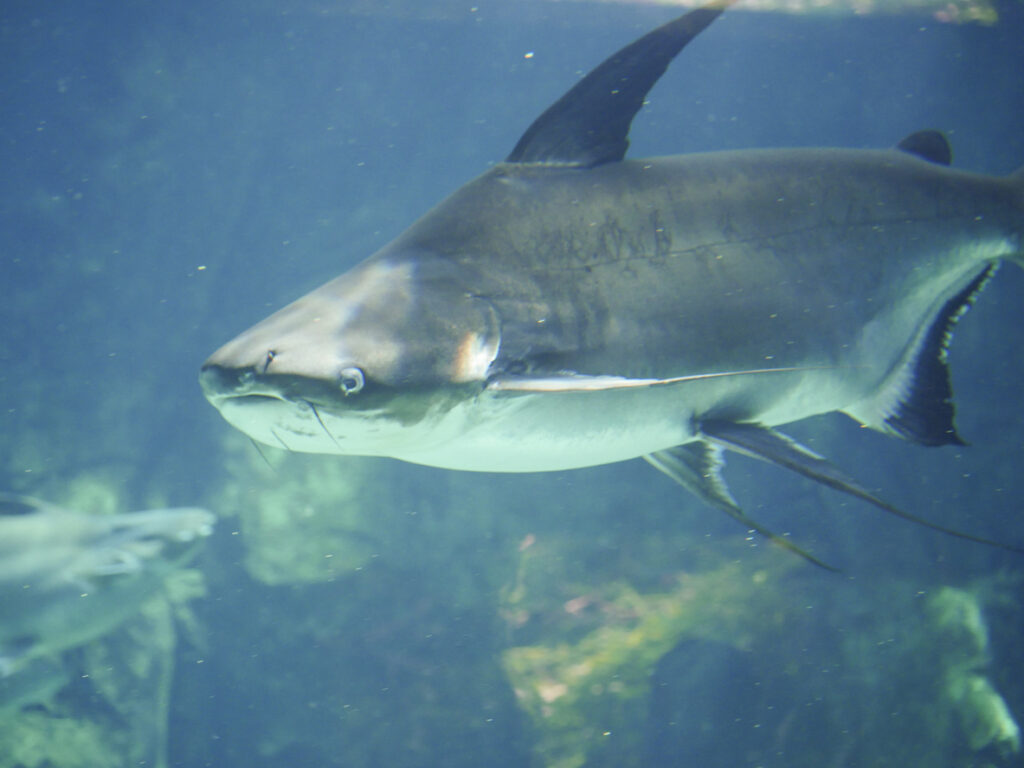
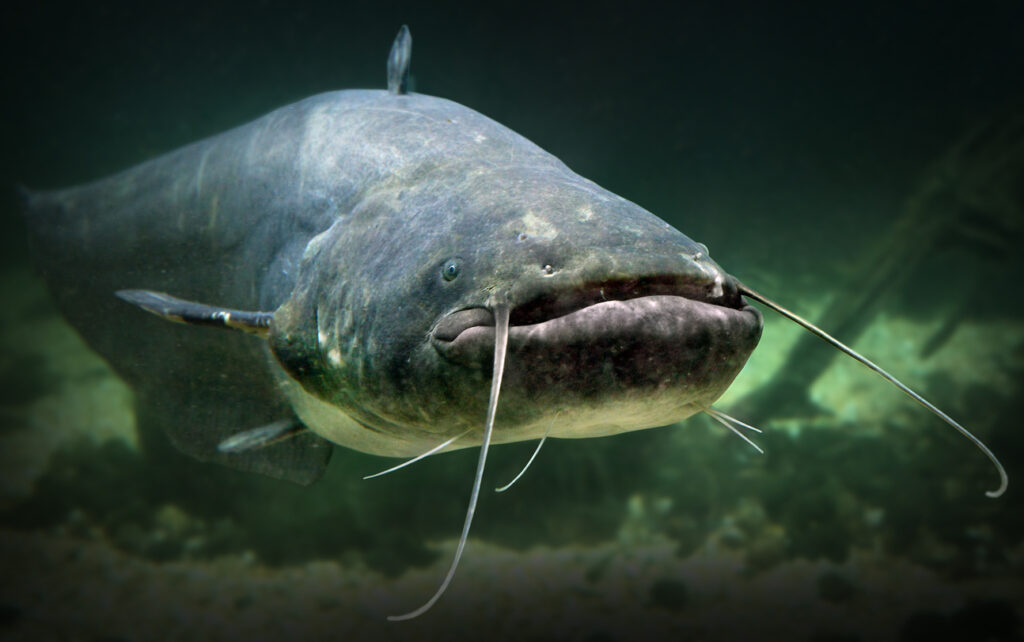
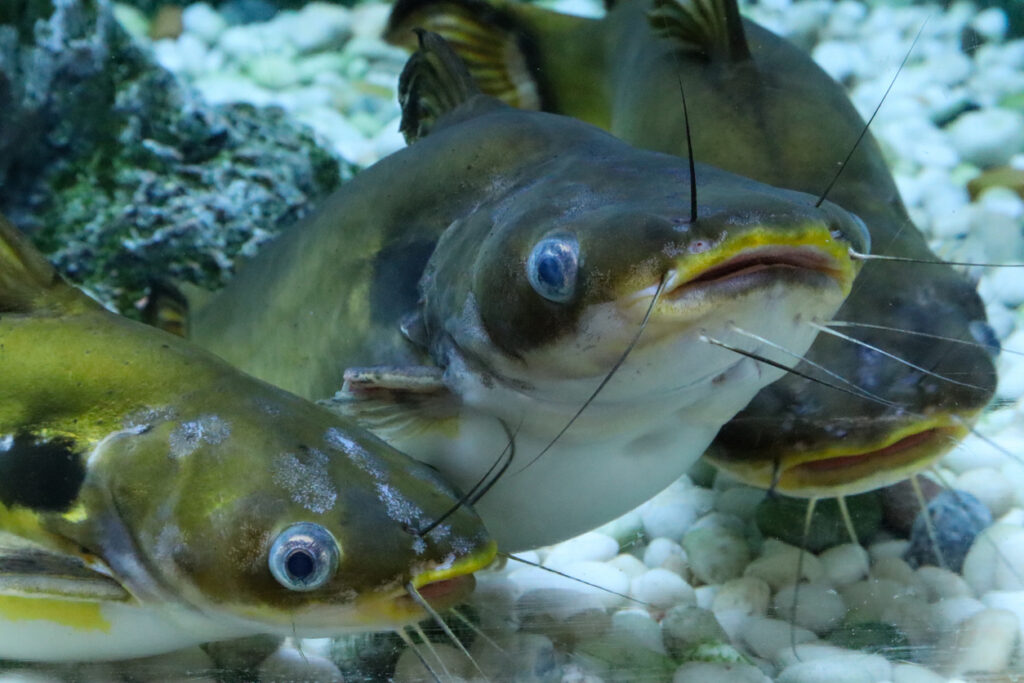
Despite all being catfish, the appearance across the different families can vary hugely. Many catfish are recognised for their long, whisker-like barbels, wide mouth and slender body. They have a flat underside, as this helps them swim along the bottom of the rivers and lakes they inhabit.
However, not all catfish have barbels, with some possessing a sucker-like mouth to help them suck up algae and waste matter from the floor, like the suckermouth catfish (Hypostomus plecostomus). What’s more, instead of having scales, all catfish are covered in a continuous layer of skin, similar to an eel. Many catfish also have bony dermal plates under their skin, which act as armour.
The colouring of catfish can vary too. Some will have a pale yellow or white underside, but their dorsal (top) side can range from green, grey and dark brown. Some species are also mottled to help with camouflage.
What type of habitat do catfish live in?
Catfish are found in freshwater, such as rivers and lakes, preferring shallow, slow-moving water. They are typically found in the tropical waters of Asia, Africa and South America. However, catfish have inhabited waters across the world, from Europe to places as far as Australia, Madagascar and New Guinea.
The main species of catfish you’ll find in the UK is the wels catfish (Silurus glanis), which is the largest freshwater fish in the country, and one of the largest freshwater fish in the world!
What do catfish eat?
What they eat depends on the species. Many catfish feed on the river or lake beds of their habitats, these are known as bottom-feeders. They are typically opportunistic feeders, which means they will adapt to whatever food is available.. Some will actively hunt prey using their sensory organs and barbels, whilst others will scavenge for food, and some are detritivores which means they will feed on waste and dead matter.
Catfish will eat a number of different things, from insects and plants to crustaceans and smaller fish. Some species are even known to be parasitic, feeding on the blood of other animals!
The role of catfish and why they are important in their ecosystem
Due to how diverse catfish are and the fact that they are found around the word, they play an important role in their ecosystem. Being both predators and detritivores, catfish can help to regulate their ecosystem by controlling populations and balancing the biodiversity of the area. This is because they help to break down detritus and algae, releasing its nutrients, while regulating the populations of smaller fish and invertebrates.
However, there are also some invasive species of catfish that can negatively impact their ecosystem, altering the balance of predator and prey.
Are catfish endangered?
With so many different species of catfish, their conservation status can vary widely. Many species are currently thriving and not at risk, while others may be struggling for survival. It’s widely been reported that the Mekong giant catfish are at risk of extinction.
Other species, like the Günther’s catfish (Horabagrus brachysoma) found in India, are currently vulnerable.
Typical reasons for catfish becoming vulnerable or critically endangered include overfishing, habitat loss and river pollution, as well as invasive species in some areas.
5 additional facts about catfish
There are so many other fascinating facts about the catfish, so here are some more for you to discover!
- The largest catfish species is the Mekong giant catfish, which can typically grow up to 3 metres long and weighs around 300kg. This species grows quickly, reaching up to 200kg in just 6 years. They can live for around 60 years.
- The smallest catfish species is debated among experts. One popular contender is the pygmy corydoras (Gastrodermus pygmaeus). This grows to around 2.5cm in length and is typically found in Brazil.
- Some catfish can breathe and walk on land. The walking catfish (Clarias batrachu) is native to Southeast Asia and can leave the water to wiggle across land to find food or a better location. It has lung-like organs too!
- Catfish are covered in tastebuds. They have thousands of tastebuds all over their bodies, reaching between 100,000 and 180,000. This helps them to detect food in murky or dark water.
- Some male catfish guard the eggs. In some species, the female lays the eggs, after which the male parent is the sole guardian until they hatch. They use their fins to create a water current over the eggs, which keeps them clean and ensures they are surrounded with oxygen-rich water.
Spot catfish at Bristol Aquarium
Here at Bristol Aquarium you’ll find a number of catfish species to come and test your knowledge. You’ll find them across our Amazing Amazon and Edge of Rainforest exhibits.
Some of the catfish species you might find here include the redtail catfish (Phractocephalus hemioliopterus), glass catfish (Kryptopterus vitreolus) and the panda catfish (Hoplisoma panda).
Don’t forget to book your tickets now for your next visit!